IT

Showing posts with the label IT
Show all

Why Did NASCAR Introduce Team Charters?

Image
NASCAR introduced team charters in 2016 to make owning a racing team more predictable and to give owners something lasting that they could transfer or sell. A charter gave a qualifying team a guaranteed place in each points race in the premier series, alongside a more stable business framework. The idea was to make it easier to plan beyond the next weekend. Understanding that original design helps explain why conversations about racing ownership often involve something you cannot see under a car's hood: a right to participate, with economic value attached to it. Consider the problem from a team owner's side. A race operation needs people, equipment and commercial partners before its cars reach the starting grid. A sponsor considering a longer commitment has an obvious question: will the team actually be in the races? NASCAR's 2016 announcement explicitly connected the new system with assuring sponsors and potential partners of continued participation. The practical logic...

Why Can a Bank Text Look Real and Still Be Fake?

Image
A bank text can look real and still be fake because the words, branding, and story in a message can be imitated. A scammer does not need to be your bank to claim that a purchase needs checking or an account needs protecting. The deception works by turning an ordinary security concern into a reason to follow the sender's instructions. A message that mentions a familiar bank is making a claim about its identity. That claim needs checking through a route you already trust, independently of the message itself. The bait often resembles something a bank might genuinely do. Chase's guide to its text messages explains that it sends account information and interactive security alerts using short codes, which are five- or six-digit phone numbers. It also sends one-time authentication codes for certain activities. This makes the situation more complicated than treating every bank text as fraudulent. Real alerts exist, so an imitation has a familiar format to borrow. The bank's own ...

Why Do AI Models Count Tokens Instead of Words?

Image
AI models count tokens because the text they process is broken into reusable pieces, then represented by numbers. A token can be a whole word, part of a word, a punctuation mark, or another small unit. Counting words in your document therefore does not tell you exactly how many units a model will receive. The software that performs the conversion is called a tokenizer. It provides a bridge between the sentences you can read and the sequences the model can work with. Imagine trying to give every possible word its own entry in a dictionary. New surnames, product names, spelling mistakes, and technical terms would keep arriving. A dictionary built only from complete words would need to be enormous and would still encounter unfamiliar items. Splitting everything into individual characters solves a different problem but makes sequences much longer. Many language models use subword tokenization as a practical middle ground. Common pieces can stay together, while less familiar words can be ...

Why Is a Live Video Stream Always a Little Behind?

Image
A live video stream arrives late because the picture has to be captured, compressed, transported, and prepared for playback before you can see it. Your player may also keep a small reserve of video to absorb interruptions. Each stage adds time between an action and its appearance on your screen. That interval is called latency. The broadcast can still be live: the event is unfolding as it is transmitted, even though your view trails the camera. On an interactive stream, the gap becomes especially noticeable when someone answers a message you sent moments earlier. The journey begins before the internet connection. A camera or game produces a succession of images, and an encoder turns them into a format that can travel efficiently. Sending every image with all its original information would require much more data. Compression can represent repeated visual information economically, including similarities between frames. The receiving device reconstructs the pictures for display. Cloudfla...

What Does the NSA Learn From Electronic Signals?

Image
Imagine trying to understand activity at a distant airfield from brief reports about radio traffic. A report that says a transmitter switched on tells you one thing. A report that shows several emissions appearing in a pattern over time may tell you something else. The difference is the work of interpretation. Signals intelligence, usually shortened to SIGINT, is information derived from electronic signals. The National Security Agency uses it to answer questions about foreign capabilities and activities for U.S. policymakers and military officials. The word “signals” covers more than spoken words. A conversation sent over a radio is a communication. Radar also emits signals, but its ordinary job is to detect objects. Those emissions can provide clues about the kind of equipment in use even when there is no conversation to understand. The NSA’s overview includes communications and radar among the sources of signals intelligence. This is a useful distinction because an analyst may lea...

How Does a Direct Deposit Reach Your Bank Account?

Image
On payday, a new line in your bank app can make it look as though your employer sent money straight to your account. In the United States, a payroll direct deposit usually takes a less direct route. Your employer sends payment instructions to its financial institution, an operator on the Automated Clearing House network sorts and delivers those instructions, and your bank or credit union credits your account. The money moves between financial institutions through settlement, while the deposit you see is the entry your own institution makes for you. Those steps can happen at different times. Picture a company with three employees who all use different banks. Its payroll file can carry instructions for all three workers at once, including how much each should receive, where the money should go, and the pay date. The employer’s bank can combine those instructions with payments from other customers and send them together in a batch. As the Federal Reserve explains , the United States has...

Why Can One Cloud Failure Take Several Apps Offline?

Image
An email inbox stops loading. A work calendar still opens, but it won’t show new appointments. A document app asks you to sign in again and gets stuck there. One cloud failure can produce all three symptoms because separate apps can rely on the same service to do part of their work. The machines holding your messages and documents might still be running. If the apps need a shared sign-in service to confirm who you are, a problem there can leave you unable to open any of them. A cloud app is a chain of requests. When you open a document, one system might check your identity, another might look up which files you have permission to see, and a third might retrieve the file itself. Some of those steps can run at the same time, while others have to wait for a previous step. If a required step times out, the app may have very little to show you. A second app can fail at that same step even when it keeps its data in an entirely separate place. From your screen, those different failures can l...

Why Can a GPU Do So Many Calculations at Once?

Image
A GPU can do many calculations at once because its hardware divides suitable work among large numbers of processing units. Instead of making one complicated calculation finish instantly, it keeps many smaller calculations moving together. The advantage is greatest when a problem contains repeated operations on different pieces of data. That pattern appears in computer graphics, scientific computing, and much of the mathematics behind artificial intelligence. The key is how the work fits the machine, rather than a universal ability to make every program faster. GPU stands for graphics processing unit. Its original purpose provides a useful clue to its design. An image contains many pixels, and producing a picture can require similar calculations across large collections of visual data. IBM's comparison of CPUs and GPUs explains how processors developed for graphics became useful for other demanding calculations. Once a task can be expressed as many suitable pieces, a processor buil...

What Does a Semiconductor Foundry Do?

Image
A semiconductor foundry manufactures chips for other companies, turning a circuit design into physical electronic devices. Its central job is to make the tiny structures and connections that allow a chip to work, then repeat that process reliably across many wafers. Some foundry services also include help with design, packaging and testing. The distinction matters because the company whose name appears on a processor does not necessarily own the factory that fabricated it. Chip design and chip manufacturing solve different problems. Designers decide what a device should do and develop the circuitry needed to achieve it. A foundry supplies a manufacturing process that can turn that circuitry into silicon. TSMC describes its dedicated foundry business as manufacturing customers’ products, rather than selling competing chip designs of its own. Companies that focus on design while contracting out fabrication are often called fabless. Other businesses combine chip design with their own manu...

How Did Binance Get Hacked?

Image
Binance’s initial investigation suggested a compromised DevOps engineer’s laptop gave an attacker access to a service container, allowing unauthorized withdrawals. That was an early finding, not a complete explanation of the October 2026 breach. Binance later reported additional breach points and said the attack involved more than one employee’s permissions or a single click. It had found no evidence of leaked wallet private keys. The known details point toward abuse of internal systems, but do not establish exactly how every withdrawal was authorized. The exchange estimated about $6.3 billion was affected and said roughly $3 billion had been frozen. Binance promised to cover losses and publish a technical post-mortem. Its statements on October 30 left the complete attack sequence under investigation. Sources: Binance’s security update and Reuters’ investigation summary . Information as of October 30, 2026.

Why Does a Bitcoin Wallet Need a Private Key?

Image
A Bitcoin wallet uses a private key to create digital signatures that authorize spending. The key is secret data, rather than a coin stored inside the phone or computer. Bitcoin’s blockchain records transactions; the wallet supplies the cryptographic proof needed to move funds. A signature lets other computers check authorization without learning the private key itself. It is tied to transaction data, so changing the signed details makes that proof fail. This is how a network can check a payment without asking the sender to reveal the secret used to approve it. Control of the key therefore matters as much as access to the wallet app. A person who obtains it can create valid signatures. Keeping signing keys separate from an internet-connected device is the principle behind offline and hardware-wallet designs. Sources: Bitcoin’s transaction explainer and wallet developer guide .  

Optimizing Data with Content-Encoding

Image
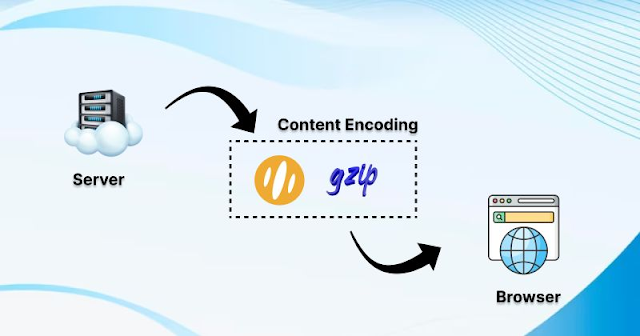
  🌟 Dive into the world of Content Encoding! 🚀 Ever wondered how those large files magically shrink in size before reaching your device? It's all thanks to Content-Encoding! 🎉 Check out the full article here:  Optimizing Data with Content-Encoding

Optimize Content Delivery: Enabling Gzip with Nginx or Ingress

Image
🚀 Unlocking Faster Web Performance: Implementing Gzip Compression on Nginx or Ingress - A Step-by-Step Guide! 🚀 Looking to supercharge your website's speed and enhance user experience? Check out the full article here:  Enabling Gzip with Nginx or Ingress